By Design (2026)
Art for Smart’s Sake
It’s true: By Design is “the movie where Juliette Lewis turns into a chair”. It’s also a pointed, poignant critique of modern isolation, consumerism, and vanity. Writer/director Amanda Kramer uses her wild premise as a hook to bait audiences into watching Sex and the City, as reimagined by Bret Easton Ellis and the ghost of Andy Warhol.
Lewis stars as Camille, an unlucky-in-love-and-finances L.A. woman who spends her free time lunching and shopping with bored, wealthy besties Lisa (Samantha Mathis) and Irene (Robin Tunney). While perusing an upscale furniture store, Camile spots a simple yet elegant wooden chair that she simply must have. She returns the next day with two months’ fun money to discover that her object of desire has been sold. Camille makes a corny movie wish, passes out, and awakens to find her consciousness swapped with that of a high-end seat.
A short time later, struggling musician Olivier (Mamoudou Athie) receives the chair as a parting gift from freshly-exed girlfriend, Marta (Alisa Torres). He senses something special about the piece, and begins connecting with it in ways that he never could within his own limited circle of vacuous friends.
Societal parody and occasional Lynchian detours comprise the glossy top coat of By Design’s high concept. Lisa, Irene, and Camille’s mother, Cynthia (Betty Buckley) all visit Camille’s apartment and have ridiculously one-sided conversations with her; in some cases, they even reply to accusations they believe are implied by the catatonic form’s silence. Olivier’s introduction finds him waiting nervously to play piano for a socialite’s cocktail party. The shady gig manager (Kier Gilchrist) eases him into a situation that might involve ticking more than keys, in a scene whose fiery red color scheme suggests Olivier’s personal hell and impending moral compromise.
Deep within its grain, Kramer’s screenplay demands more of its wacky premise and, by extension, the audience. Cynthia shows up to Camille’s place with a black eye, and offers another in a decades-long list of domestic abuse cover-ups. It’s also implied that Camille never intervened in her parents’ business, never spoke up to save (or even support) her mother. When the film’s narrator (Melanie Griffith) says, “the body of Camille is a shape that means nothing”, it’s also a dig at Camille’s feelings toward Cynthia: superficially mother/daughter, but not worth the risk of injury or embarrassment.
By Design’s casting adds yet another layer to Kramer’s scathing social death stare. Mathis and Tunney hit the pop culture radar in the 1990s, playing iconic, anti-Establishment rebels in Pump Up the Volume and Empire Records, respectively. Here, they play clueless Establishment Wives, killing time by spending money and indulging in pithy gossip-column inanities (“Camille, you’re alive. How many people across time can actually say that?”). Udo Kier’s cameo as the chair’s eccentric designer illustrates the gulf between artisans who pour themselves into their creations and vapid collectors who see only investments or a means to fill up rooms.
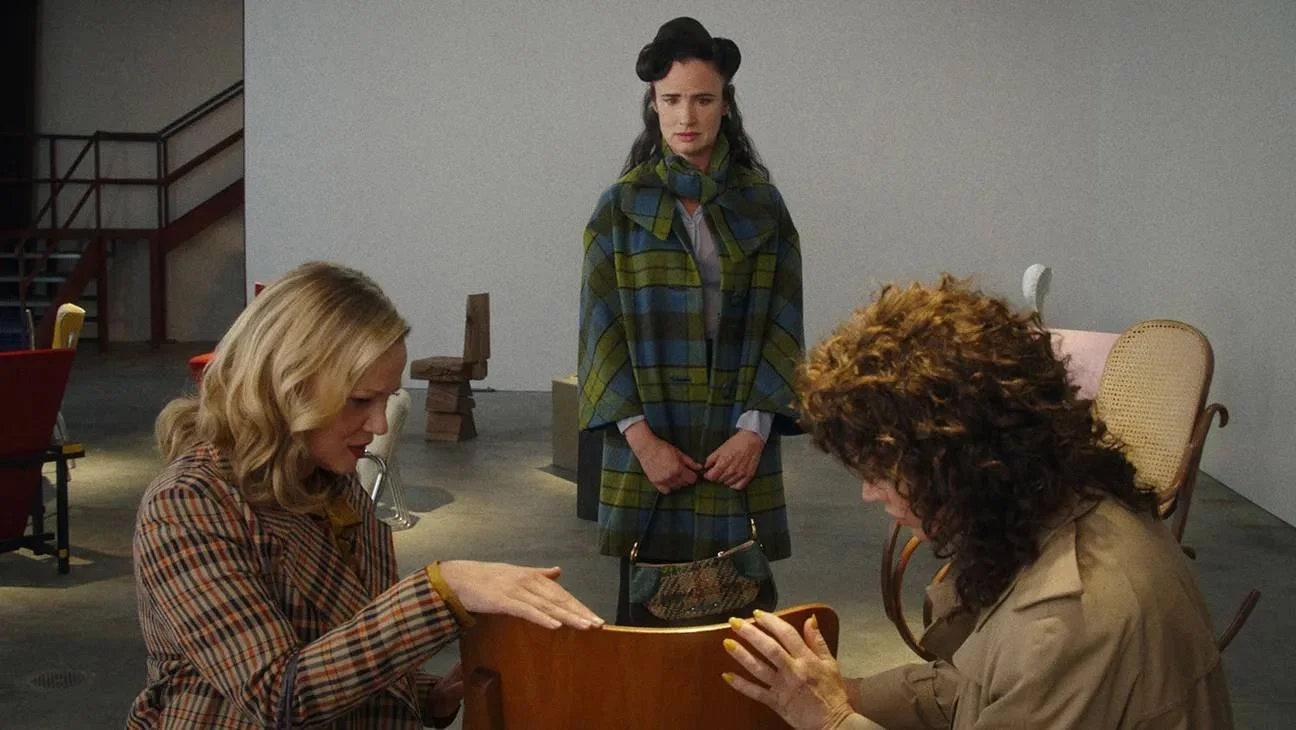
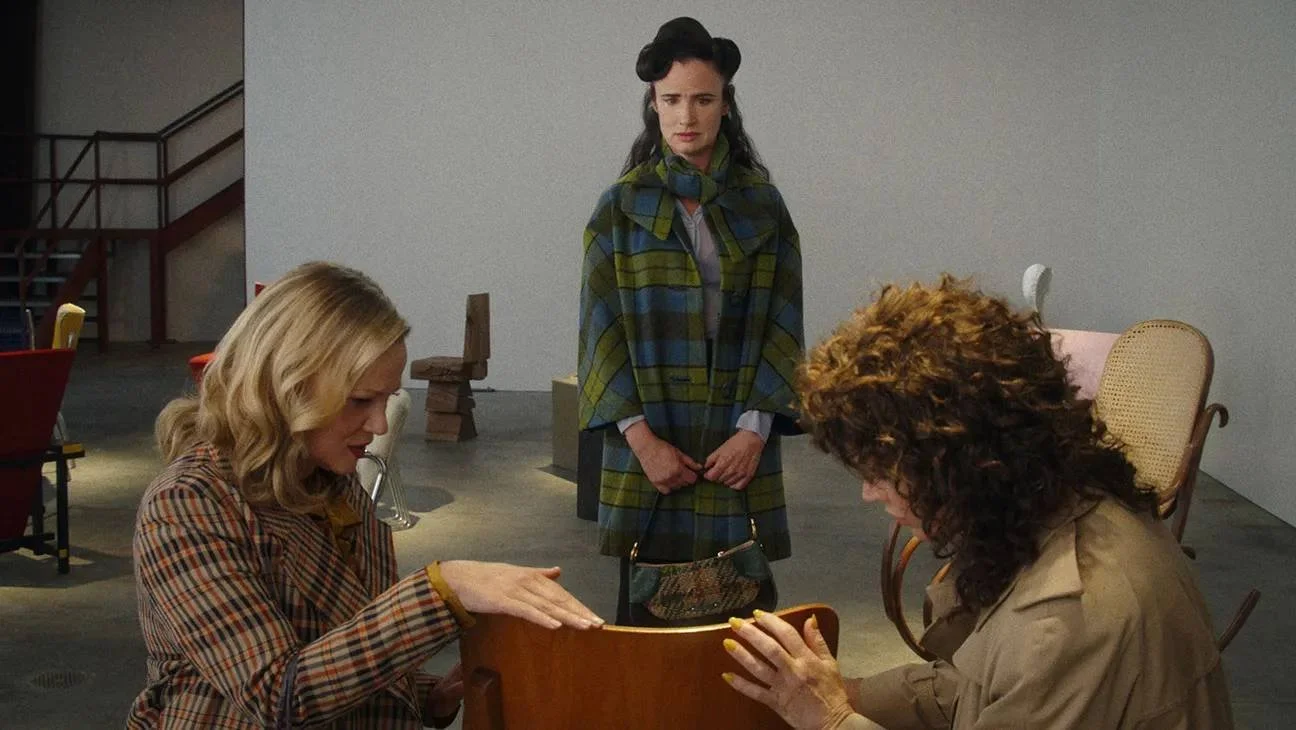
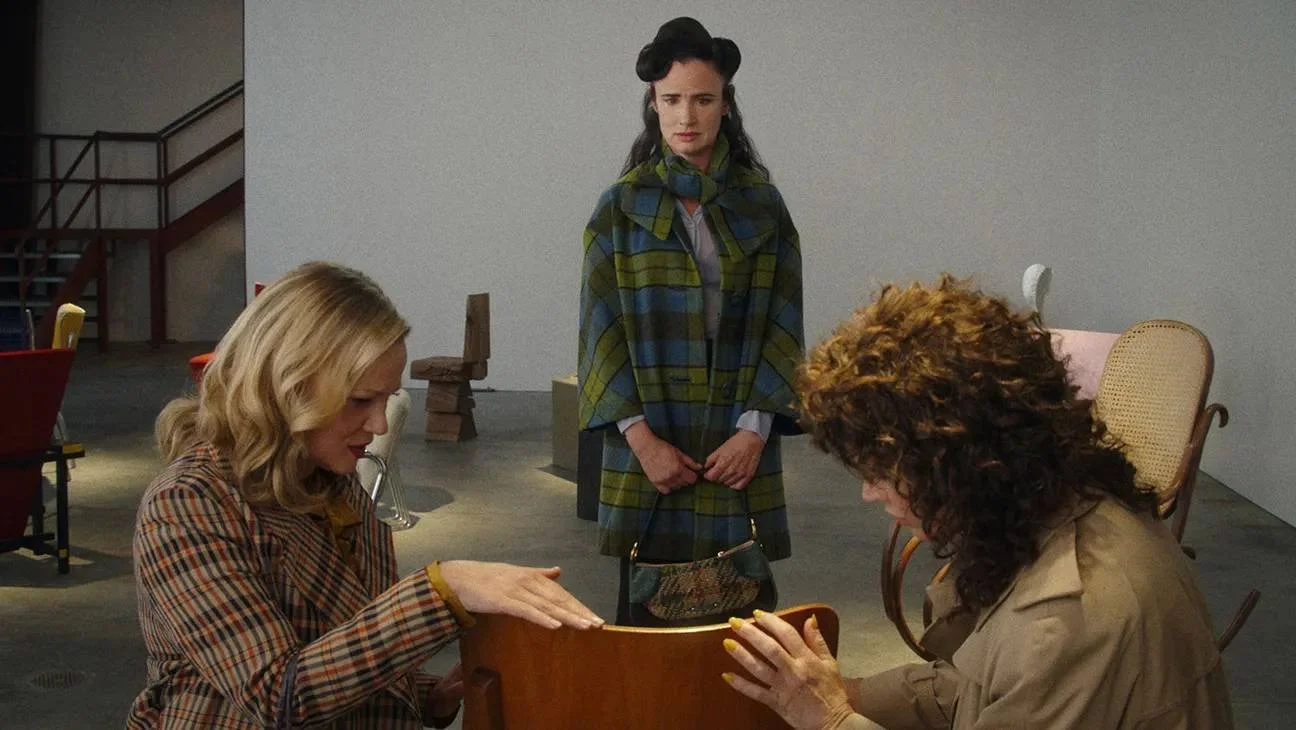
Even the film’s sillier moments have something to say. Clifton Collins, Jr. plays a stalker who makes his move on Camille after the swap. Unable to elicit any reaction during his clumsy kidnapping attempt, he offers a weird and touching soliloquy about rejection that contrasts with the rest of the film’s talk-at-hers. When Olivier brings the Camille chair to a dinner party, he’s faced with the kind of urbane, inane chatter that drove Patrick Bateman to fist-quaking rage in American Psycho.** It’s all fun and games until the mask drops and a gaggle of spoiled white women begin ripping Olivier (who’s black) out of his own seat to find out what’s so special about it.
By Design head-fakes toward an obvious fairy tale ending, in which Camille regains her body and lives happily ever after with Olivier. Though her ostensibly noble-but-tragic leads are contrasted by ghoulish supporting characters throughout, Kramer doesn’t let anyone off the hook. She sidesteps the storybook and indulges in the surreal, leaving audiences a masterfully sad, comic puzzle that they’ll just have to sit with.
*Fittingly, both were directed by Allan Moyle.
**Also starring Samantha Mathis.
Check out Ian’s interview with By Design writer/director Amanda Kramer!